The Blog | Ovation Med Spa The Blog | Ovation Med Spa

FDA-Cleared 250 Picoseconds All Ink Colors All Skin Tones

Pico Majesty
Tattoo
Removal

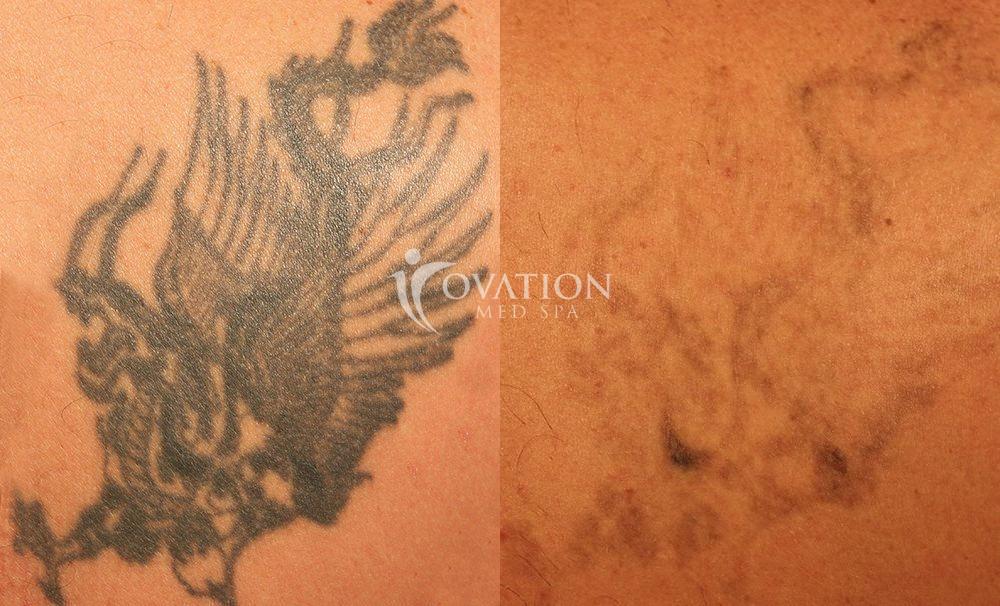
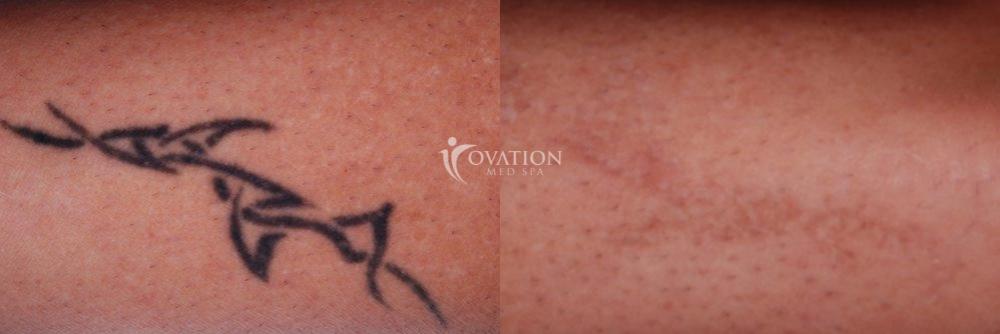
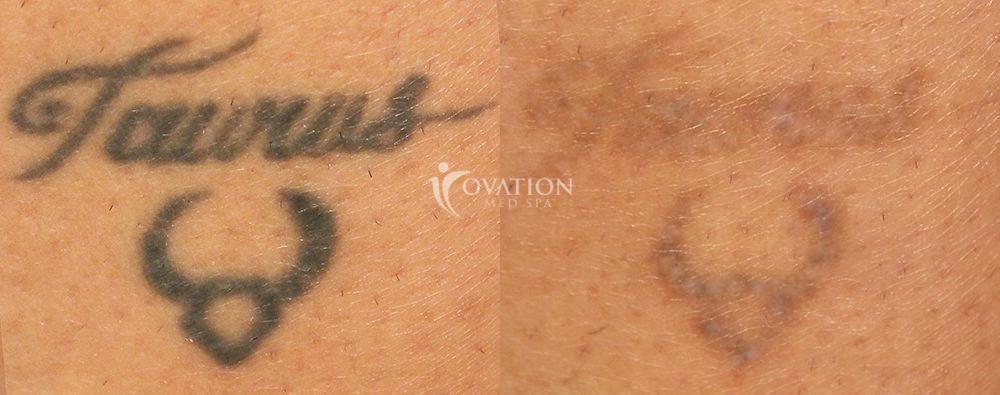
The Picocare Majesty is the world's first 250-picosecond tattoo removal laser — delivering pulses so short that ink is shattered primarily through a photoacoustic shockwave rather than heat. The result: more complete ink fragmentation per session, significantly less thermal risk to surrounding skin, and effective clearance of all ink colors including the light blues, greens, and yellows that conventional Q-switched lasers consistently fail to fully remove. Whether it's a fresh tattoo you've reconsidered, a decade-old piece you're ready to be done with, or a partially treated tattoo that reached its limit with another device — the Pico Majesty can take it further.

250ps
The Technology Difference

Why Picosecond Is a
Meaningful Leap Forward

Not all tattoo removal lasers are the same. The difference between nanosecond and picosecond technology isn't just marketing — it's physics, and it directly affects how much ink is cleared per session and what happens to your skin in the process.

Previous Generation
Q-Switched Nanosecond Lasers
  • Pulse duration: 1–10 nanoseconds (billionths of a second)
  • Works primarily via photothermal (heat) effect — heating ink until it shatters
  • Heat diffuses to surrounding tissue, increasing risk of burns, scarring, and pigmentation changes
  • Ink particles shattered into larger fragments — slower immune clearance
  • Struggles with light colors: blue, green, yellow, and orange are often incompletely cleared
  • Higher risk of post-inflammatory hyperpigmentation on darker skin tones
  • Typically requires 10–15+ sessions for professional tattoos
Pico Majesty at Ovation
250-Picosecond Photoacoustic Technology
  • Pulse duration: 250 picoseconds (trillionths of a second) — the shortest available
  • Works primarily via photoacoustic (shockwave) effect — mechanically shattering ink with minimal heat
  • Minimal thermal spread to surrounding tissue — significantly lower scarring and pigmentation risk
  • Ink shattered into microscopic particles — cleared faster by the lymphatic system
  • 4 wavelengths including 595nm and 660nm dye handpieces specifically for blue, green, and difficult colors
  • Safer for all skin tones with dramatically reduced side effect profile
  • Most professional tattoos clear in 4–8 sessions; many in fewer than conventional lasers require
Complete Color Coverage

Four Wavelengths.
Every Ink Color.

Different ink pigments absorb different wavelengths of light. The Pico Majesty's four-wavelength system ensures every color in your tattoo has an optimal match — including the traditionally difficult pigments that other lasers leave behind.

1064nm Nd:YAG
Black, Dark Blue & Deep Pigments
The 1064nm wavelength penetrates deepest and is most effective against black and very dark blue ink — the most common tattoo colors and the ones that sit deepest in the dermis. Also the safest wavelength for darker skin tones.
BlackDark BlueDark BrownDark Gray
532nm Nd:YAG
Red, Orange & Warm Tones
The 532nm wavelength specifically targets the warm-toned ink pigments that absorb green light. Red tattoos — notoriously difficult for single-wavelength systems — respond very well to this wavelength, as do orange, some purples, and warm browns.
RedOrangeYellow-RedWarm BrownPurple
595nm Dye Handpiece
Yellow, Orange & Sensitive Pigments
Yellow is one of the most resistant ink colors — it reflects most laser wavelengths and often survives conventional treatments. The 595nm dye handpiece targets this gap specifically, delivering energy at the wavelength yellow pigment absorbs most efficiently.
YellowBright OrangeLight GreenSensitive pigments
660nm Dye Handpiece
Blue, Green & Teal
Light blue and green inks are famously resistant to standard Nd:YAG lasers because they don't absorb 1064nm or 532nm light efficiently. The 660nm dye handpiece fills this critical gap — targeting the exact absorption range of sky blue, teal, and green pigments that most other systems cannot adequately address.
Sky BlueTealGreenCyanTurquoise
* White ink cannot be removed with any laser technology. Cosmetic tattoos (lips, brows, eyeliner) require a specialized consultation before treatment.
Why Pico Majesty at Ovation

More Complete Clearance.
Safer for Skin.

The World's Shortest Pulse
At 250 picoseconds, the Pico Majesty delivers the shortest pulse duration available in aesthetic laser medicine. Shorter pulses mean more mechanical shockwave energy and less heat — which translates directly to smaller ink fragments, faster immune clearance, and a significantly lower risk of the thermal side effects that have made tattoo removal feared for good reason.
🎨
Nothing Left Behind
Most tattoo removal clinics run a single Q-switched 1064/532nm system. They can clear black and red reasonably well — but they'll tell you light blue, teal, and yellow are "very difficult" or "may not fully clear." The Pico Majesty's 595nm and 660nm dye handpieces specifically exist to solve this problem. If there's color in your tattoo, we have the wavelength for it.
🌗
Safe for All Skin Tones
Traditional Q-switched lasers carry meaningful risk of post-inflammatory hyperpigmentation and scarring on darker skin tones because of their thermal mechanism. The Pico Majesty's photoacoustic approach dramatically reduces thermal impact, making it a far safer choice for Fitzpatrick types IV–VI — skin types that previously had limited options for tattoo removal.
🔄
Effective on Previously Treated Tattoos
Many clients come to us after reaching a plateau with a Q-switched laser elsewhere. The Pico Majesty's superior photoacoustic effect can break down ink fragments that nanosecond lasers left behind — because those fragments are already smaller, and the shorter pulse duration reaches the photoacoustic threshold more efficiently for tiny particles.
What to Expect

Before, During
& After

Your Consultation

Before your first session we'll assess your tattoo's size, ink colors, depth, age, and the presence of any previous laser treatment. This determines your realistic session estimate and which wavelengths and handpieces will be used. Not all tattoos are the same — a small, single-color tattoo and a large, multi-color professional piece are very different clinical challenges, and your treatment plan will reflect that honestly.

Before Your Session

Avoid sun exposure to the treatment area for 2–4 weeks prior. Come in with clean skin — no lotions or creams on the tattoo. If your tattoo is on an area that tends to tan (arms, legs, shoulders), consistent SPF use between sessions is important to maintain a stable baseline melanin level for safe treatment.

We apply a topical numbing cream before treatment — plan to arrive 20–30 minutes early to allow time for it to take effect.

During Treatment

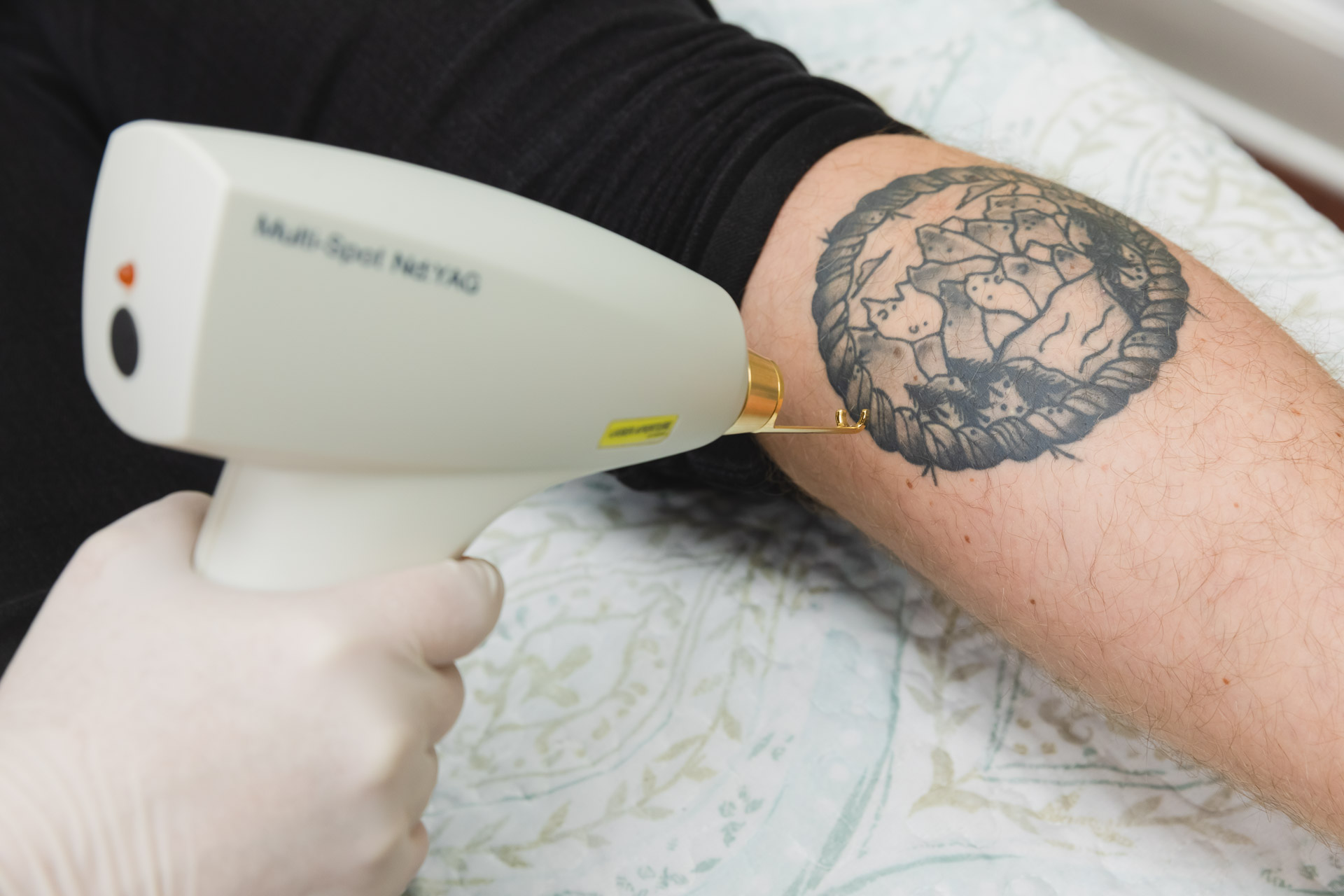
You'll wear protective eyewear throughout. The Pico Majesty handpiece is passed over the tattoo in overlapping passes. As the laser fires, you'll typically see the tattoo immediately whiten — a process called frosting, which is the ink reacting to the energy and is a positive sign of an effective treatment. Cold air is directed at the treatment area throughout. Treatment time varies: a small tattoo may take a few minutes; a large multi-color piece may take 20–30 minutes.

After Treatment

Expect some redness, minor swelling, and possibly pinpoint bruising in the treatment area — all normal. Some clients experience very minor blistering, which heals without issue when kept clean and moisturized. The frosted whitening fades within 15–30 minutes post-treatment.

Over the following 6–8 weeks, your lymphatic system gradually removes the microscopic ink fragments. The tattoo will continue to fade progressively between sessions — you often see the most improvement in the 4–6 weeks following treatment rather than immediately. Sessions are spaced 6–8 weeks apart to allow full immune clearance between treatments.

Why Results Are Progressive

The laser doesn't remove ink — it shatters it into microscopic particles. Your immune system then transports those particles through the lymphatic system and eliminates them. This is why tattoo removal takes multiple sessions: each treatment shatters more ink, and your body needs time between sessions to clear the fragments. Rushing sessions by shortening the interval doesn't accelerate results — it limits them. The 6–8 week interval is clinically optimal, not arbitrary.

Treatment Details
Session Length10–30 min
Sessions (typical)4–8
Interval6–8 weeks
DowntimeMinimal
NumbingTopical included
Results VisibleAfter each session
Pulse Duration250 picoseconds
Peak Power2 GW
Wavelengths4 (1064 / 532 / 595 / 660nm)

Good Candidates

  • Any skin tone, Fitzpatrick I–VI
  • All ink colors, including blues, greens, and yellows
  • Professional, amateur, or cosmetic tattoos
  • Partially treated tattoos that have plateaued
  • Those wanting complete removal
  • Those wanting significant fading for cover-up work
  • Good immune health for optimal ink clearance
White ink cannot be removed with any laser. Cosmetic tattoos (permanent makeup) require a specialized consultation — some pigments contain iron oxides that can darken with laser treatment.
Common Questions

Tattoo Removal FAQ

How many sessions does tattoo removal take? +
It depends on the tattoo's size, ink colors, depth, age, and your immune response. Black ink on lighter skin typically responds fastest — many see significant clearance in 4–6 sessions. Multi-color, professional-grade, or previously treated tattoos often require 6–12 sessions. Sessions are spaced 6–8 weeks apart to allow your lymphatic system to clear fragmented ink particles between treatments.
Why is Pico Majesty better than Q-switched lasers? +
Traditional Q-switched lasers work through photothermal (heat) energy. The problem: the heat required to shatter ink also risks burning surrounding skin, causing scarring, and leaving post-inflammatory pigmentation, especially on darker skin. The Pico Majesty's 250ps pulses are so fast they work primarily through a photoacoustic shockwave — mechanically shattering ink with minimal thermal impact to tissue. The ink also breaks into smaller fragments that your immune system clears faster, meaning more progress per session.
Can you remove all tattoo colors? +
The Pico Majesty's four wavelengths cover the full ink spectrum. The 1064nm targets black and dark pigments; 532nm addresses red, orange, and warm tones; the 595nm dye handpiece is specifically for yellows and sensitive pigments; and the 660nm dye handpiece targets light blue, teal, and green — the traditionally difficult colors. White ink cannot be removed with any laser technology.
Does it work on dark skin? +
Yes, with appropriate settings. The 1064nm wavelength is the safest for darker skin tones, as it bypasses surface melanin and targets the ink directly. The photoacoustic nature of picosecond technology significantly reduces thermal risk compared to nanosecond systems. We'll select the appropriate wavelength and settings based on your Fitzpatrick type.
Can you treat a tattoo that's already been partially removed elsewhere? +
Absolutely. Previously treated tattoos are often strong candidates for the Pico Majesty. Prior treatment has already fragmented some ink, and the Pico Majesty's superior photoacoustic effect can break down remaining particles that older or less powerful lasers couldn't fully address. Many clients come to us specifically after plateauing with another system.
How much does it hurt? +
We apply topical numbing cream before every session. Most clients describe the sensation as a sharp, quick snap — uncomfortable but very brief with each pulse. Because the Pico Majesty's ultra-short pulses minimize heat buildup, there is typically less lingering discomfort than with Q-switched systems. Small tattoos take only minutes; discomfort is generally very manageable.
Ready to Start

Ready to Be Done
with Your Tattoo?

Schedule a consultation at our Woodway Drive office. We'll assess your tattoo, give you a realistic session estimate, and map out a clear treatment plan. A $50 consultation fee applies.

$50 consultation fee.